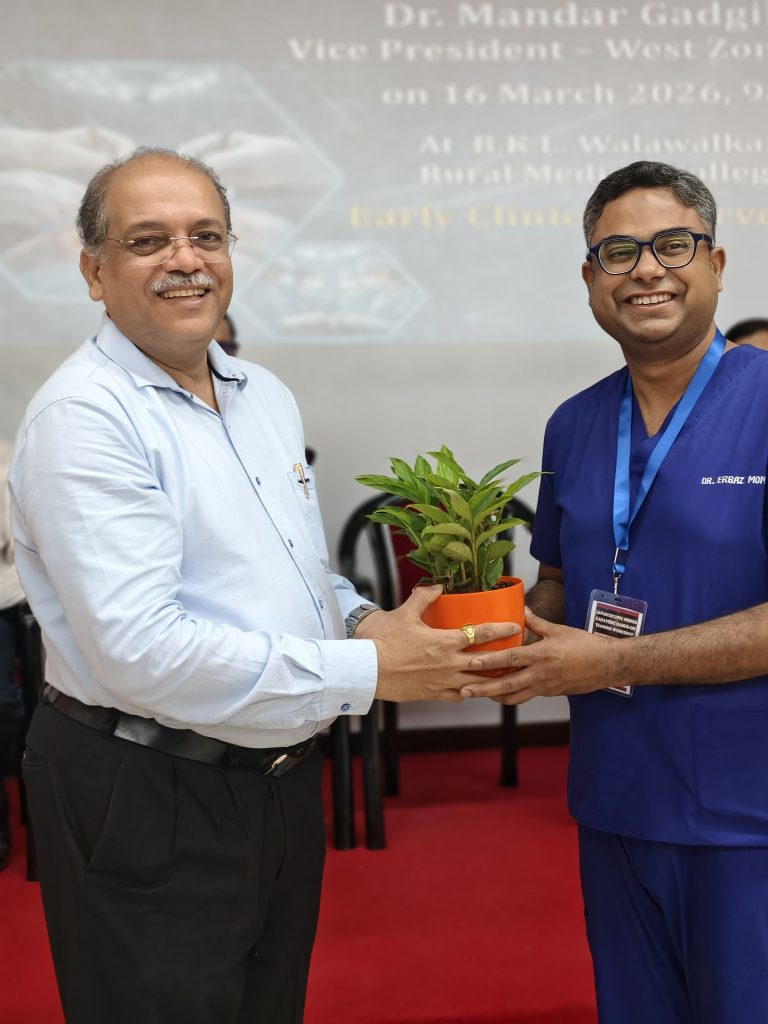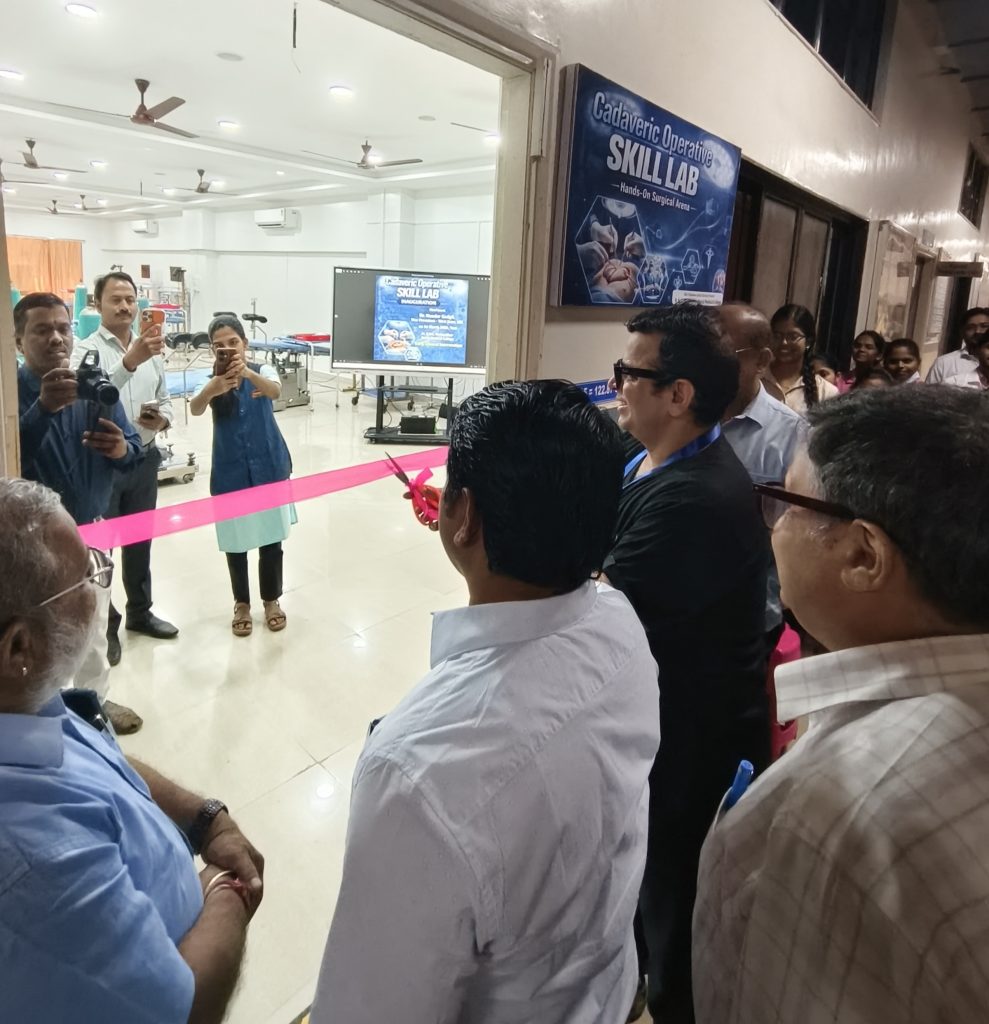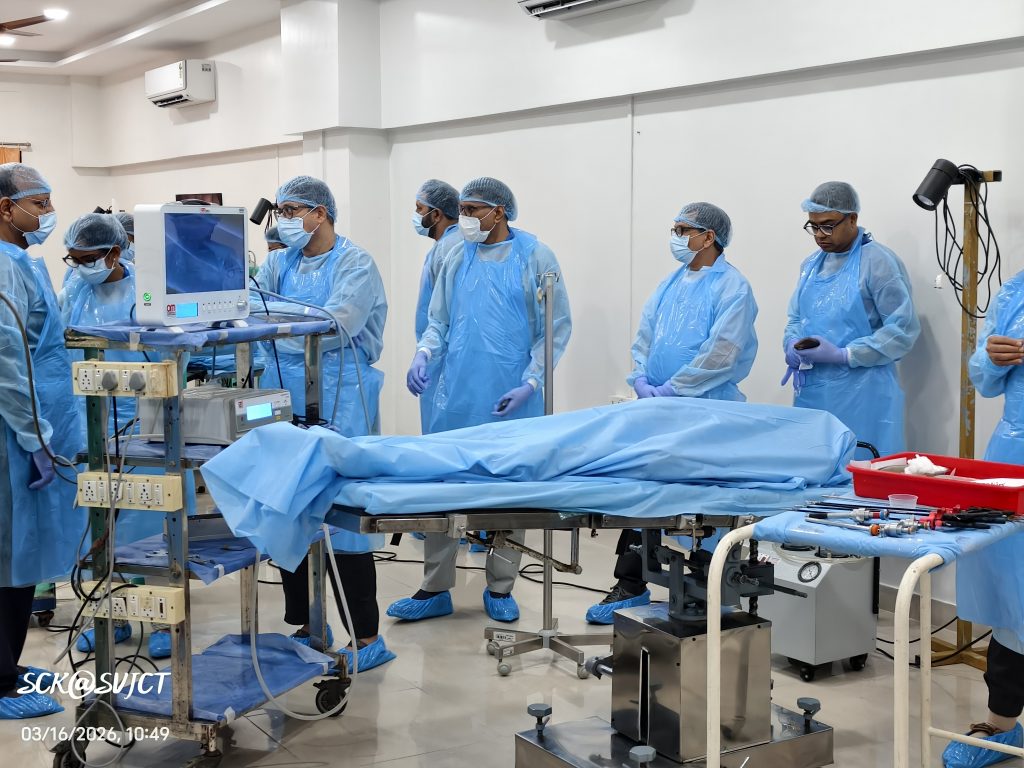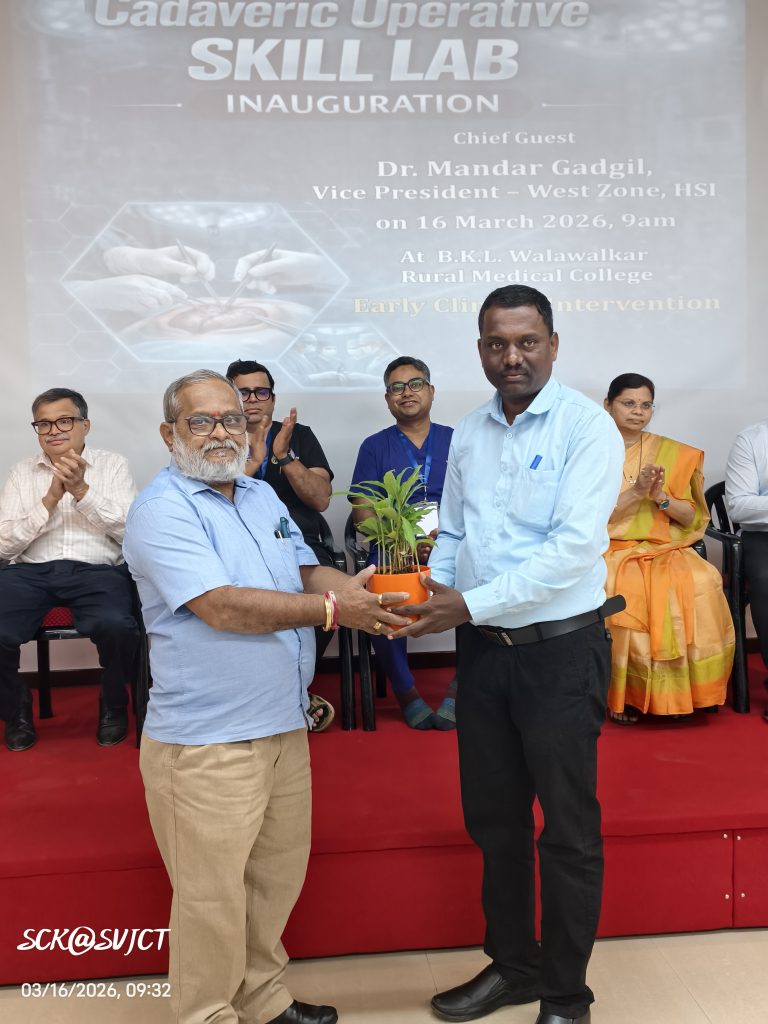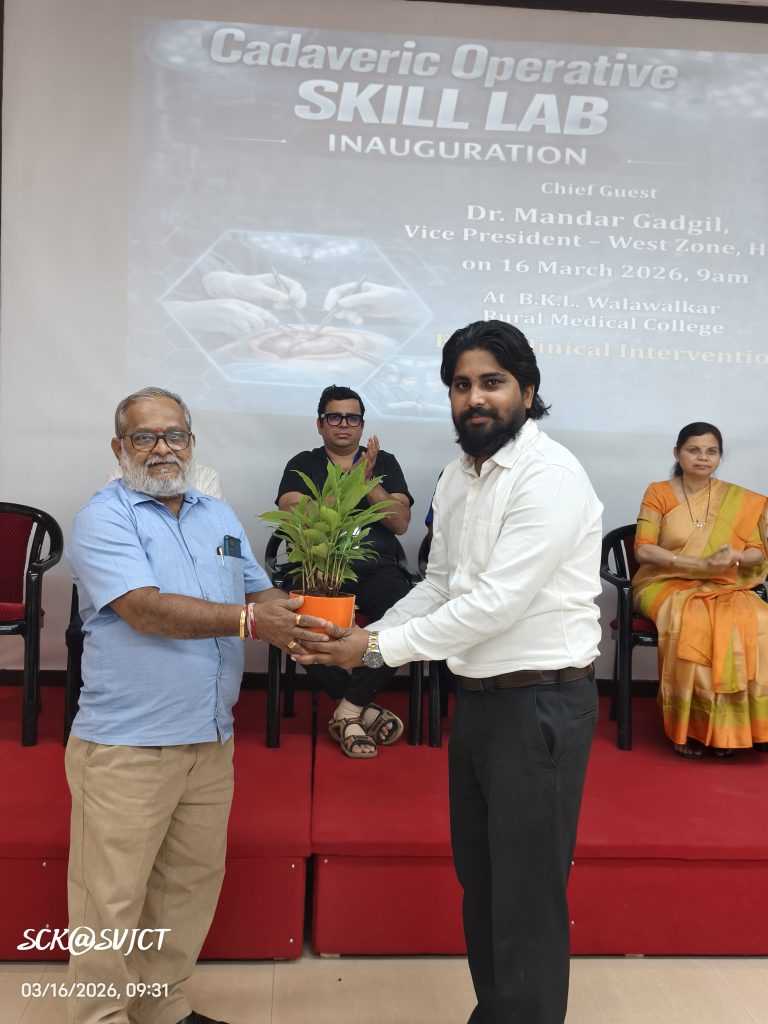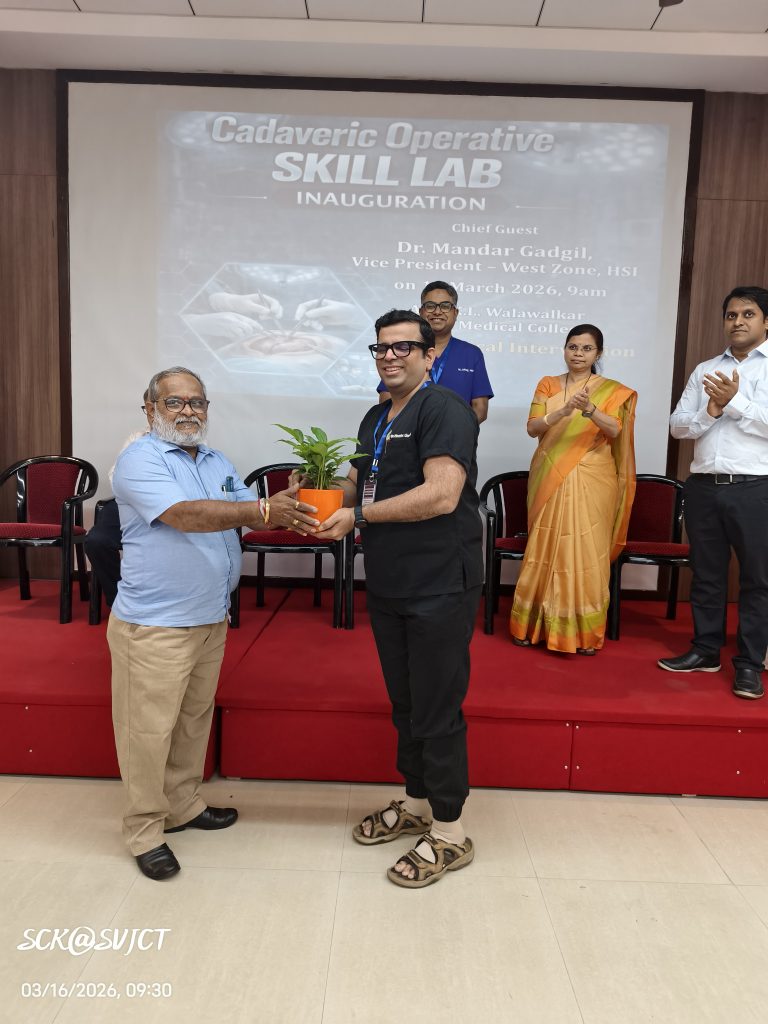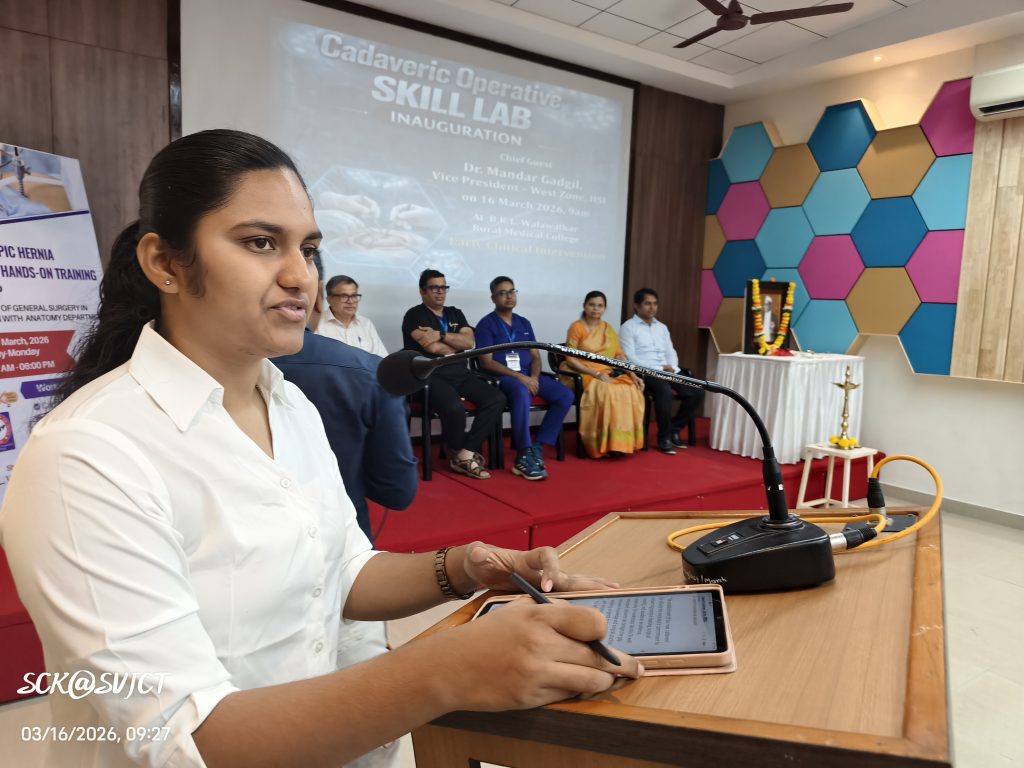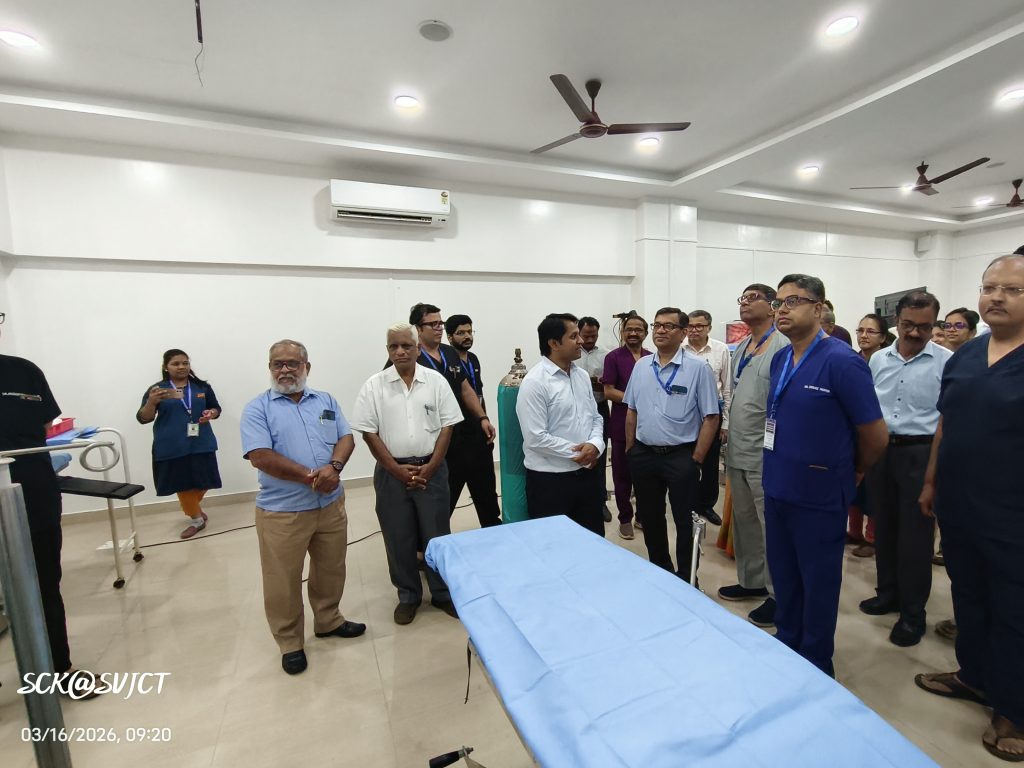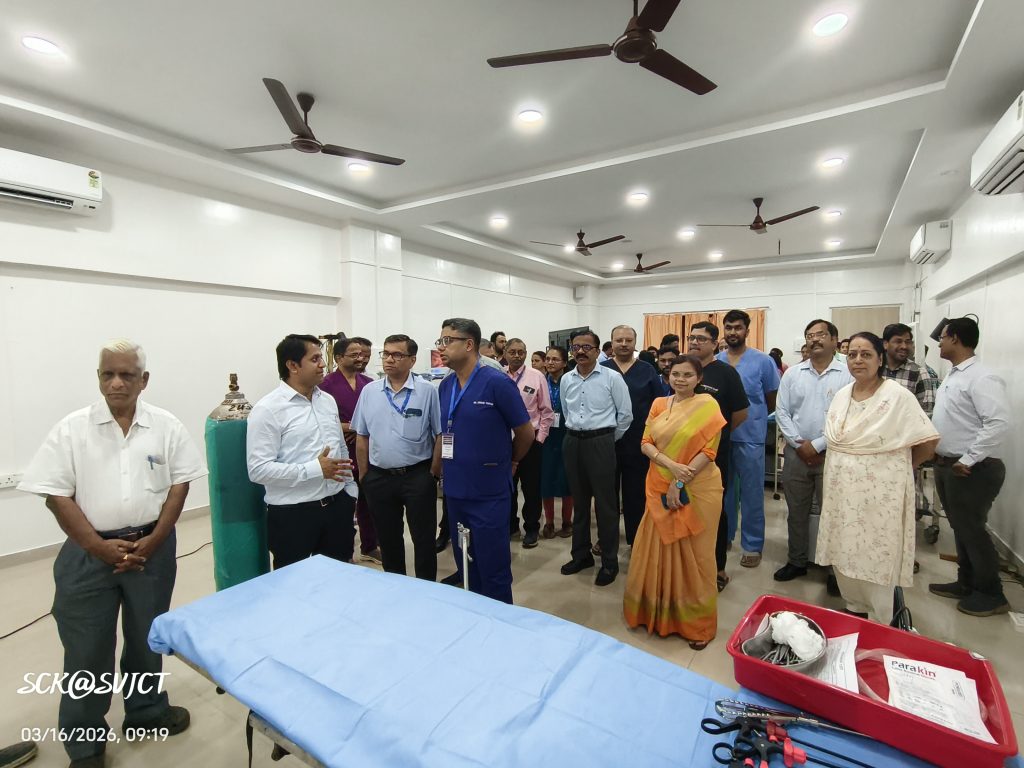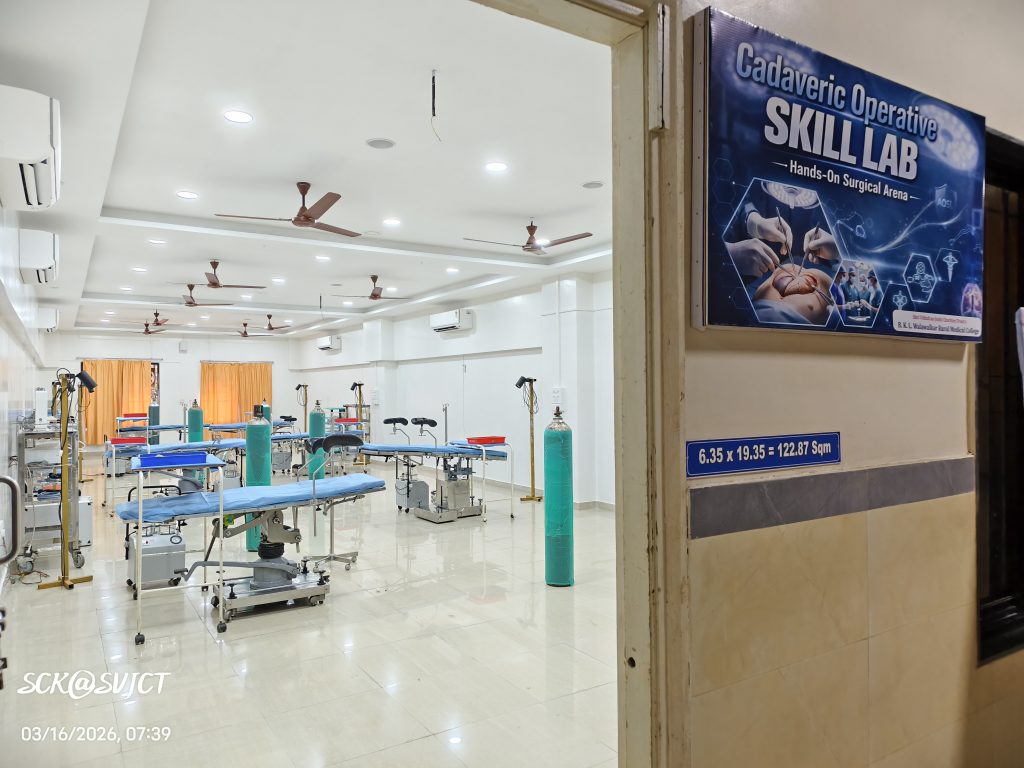
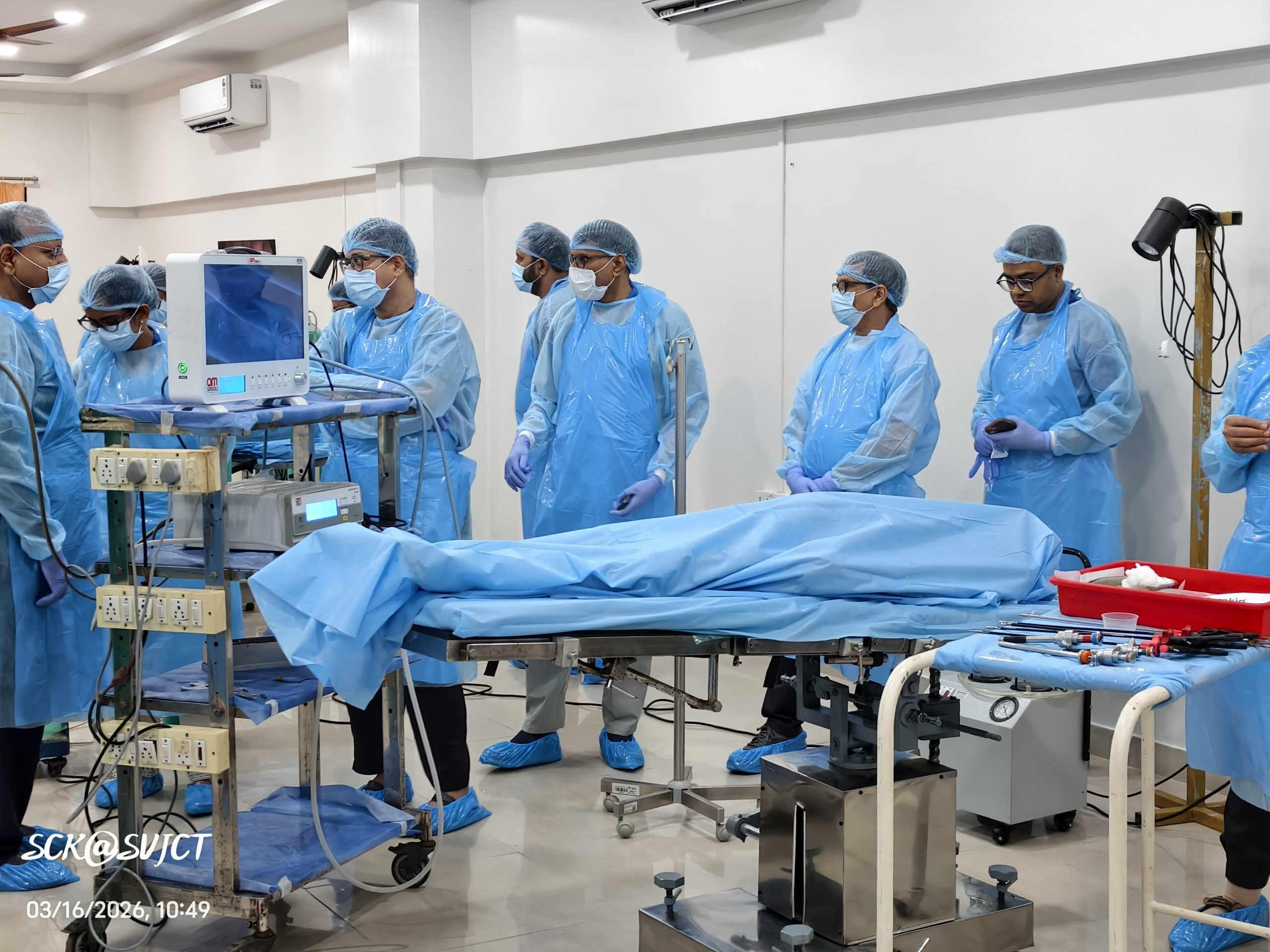
The Cadaveric Operative Skill Laboratory at B.K.L. Walawalkar Rural Medical College was formally inaugurated on March 16, 2026, marking a major step forward in the institution’s commitment to advancing skill-based medical education. Established under the aegis of SVJCT, the state-of-the-art facility is designed to deliver comprehensive hands-on training across multiple surgical disciplines using modern techniques and advanced infrastructure. The inauguration ceremony commenced at 9:00 AM and was graced by Chief Guest Dr. Mandar Gadgil, Vice President – West Zone, Hernia Society of India. His presence highlighted the growing importance of structured cadaver-based training in modern medical practice. The event was attended by several distinguished dignitaries, including Dr. Sunil Nadkarni (Trustee), Dr. Suvarna Patil (Medical Director), Dr. Mansingrao Ghatge (Dean), Dr. Netaji Patil (College Coordinator), Dr. Pushpa Burute (Head, Department of Anatomy), and Dr. Prashant Moolya (Faculty In-charge, Cadaveric Skill Lab), along with faculty members from various departments. The newly inaugurated laboratory is a fully air-conditioned, well-equipped facility spread across approximately 122.87 square meters. It features advanced operative infrastructure, including modern operating tables, C-arm imaging systems, CO₂ insufflation units, high-definition camera systems, and multiple endoscopic and laparoscopic scopes. The lab is designed to support a wide spectrum of procedures, including open, laparoscopic, and endoscopic surgical techniques. Addressing the gathering, Dr. Netaji Patil emphasized the vision behind establishing the laboratory and its potential to transform clinical training through experiential learning. He noted that the facility will enable structured programs in laparoscopic abdominal surgery, obstetrics and gynaecology procedures, orthopaedic interventions, and anaesthesia-related regional block techniques. The cadaveric skill lab aims to provide a realistic surgical environment, allowing trainees to develop a deeper understanding of three-dimensional anatomical relationships and variations. Unlike simulation models, cadaver-based training offers authentic tissue handling and spatial orientation, significantly enhancing surgical proficiency, confidence, and preparedness in a safe and controlled setting. The inauguration of this modern facility represents a significant milestone for the institution, reinforcing its dedication to academic excellence and innovation in medical education. The initiative is expected to play a pivotal role in shaping competent and skilled healthcare professionals equipped to meet the evolving demands of contemporary surgical practice.