The hands are a remarkable and often underappreciated component of the human body. Their skin possesses a high degree of sensitivity, enabling the rapid differentiation between a sharp needle and soft wool, as well as between a hot pot and an ice cube. Comprising 27 bones and 43 muscles and tendons, the hands facilitate a wide array of activities with ease. This dexterity is exemplified by the intricate mudras performed by Kathak dancers, who manipulate all five fingers in opposing directions simultaneously. Such skilled movements are beyond the capabilities of robots. The hand’s grasp can extend up to 6-7 inches, and when the fingers are tightly closed, not a single drop of water escapes. The anatomy of the hand and wrist is intricate, reflecting its multifaceted structure and function. In surgical practice, the finesse of a surgeon’s hands is crucial, necessitating meticulous care in the management of injured or diseased tissues. Consequently, the training of a proficient surgeon must encompass both patient care and the principles of sound surgical practice.
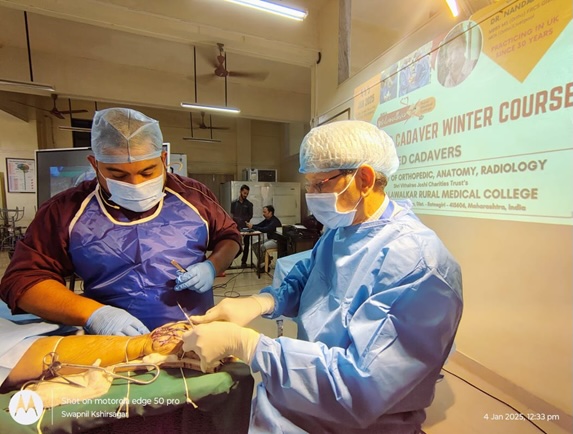
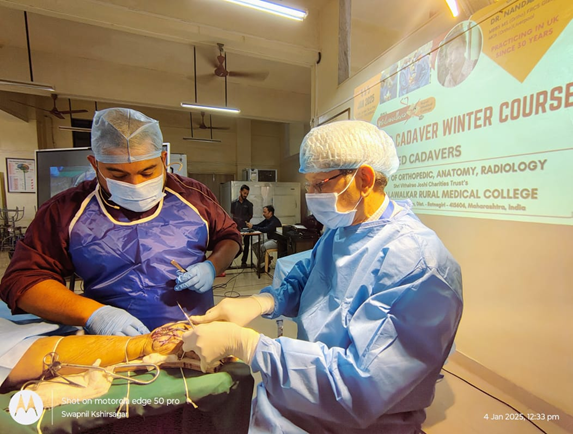
And keeping this important principle in mind Shri. Vithalrao Joshi Charities Trust’s B. K. L. Walawalkar Rural Medical College organized ‘The SVJCT Hand Cadaver Winter Course’ on 04th and 05th January 2025. This initiative was remarkable, designed to deliver advanced education in hand surgery. The workshop provided postgraduate training in Osteopathy, benefiting both trainees and consultants through a collaborative and enriching experience that enhanced their skills and knowledge. The course is led by Dr. Raghunandan Kanvinde, who possesses around 35 years of experience in England. Dr. Kanvinde is an Orthopedic and Upper Limb Hand Surgeon, holding the qualifications of MS (Orthopedics), FRCS, and MCh (Orthopedics) from the UK. He now frequently visits Dervan on weekends to share his expertise with patients.
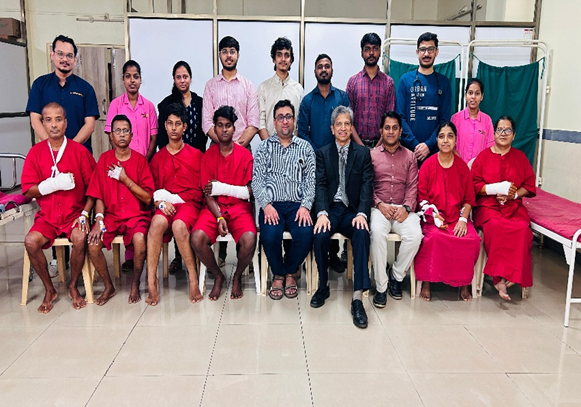
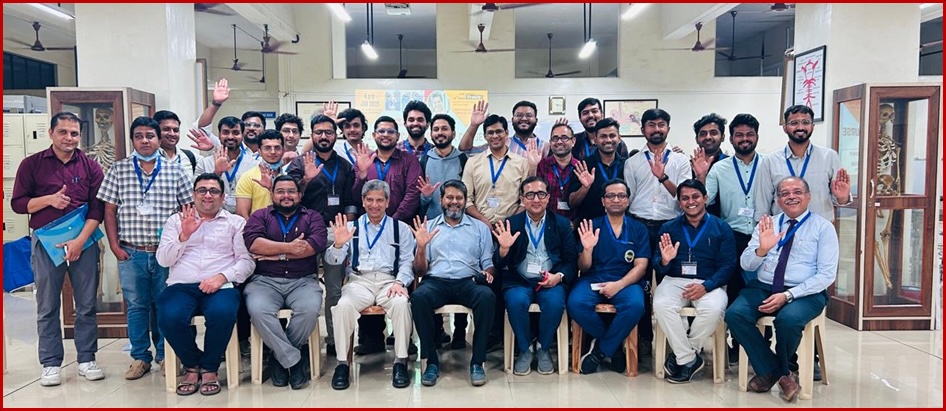
In collaboration with the lead trainers, the following esteemed professionals contributed to the training program: Dr. Abhijit Wahegaonkar, Director of Hand Surgery at Sahyadri Hospital in Pune; Dr. Ashok Ghodke, Professor and Unit Head at MGM Medical College in Navi Mumbai; Dr. Prashant Kamble, Consultant Hand, Wrist, and Elbow Surgeon at KEM Hospital in Mumbai; Dr. Sunil Nadkarni, Consultant Spine Surgeon at BKLWRMC; Dr. Netaji Patil, Consulting Radiologist and College Coordinator at BKLWRMC; Dr. Prashant Velhal, Professor of Anatomy at BKLWRMC; Dr. Omkar Sudame, Assistant Professor in Orthopedics at BKLWRMC; Dr. Anish Paul, Consultant Orthopedic Surgeon at BKLWRMC; and Miss Kripa Tandon, Occupational Therapist at TATA Hospital in Mumbai. Additionally, various other specialists provided guidance to the trainees. Approximately 25 trainees from cities including Mumbai, Pune, Kolhapur, Sangli, Ratnagiri, and Chiplun benefited from this camp.
The two-day program effectively integrated lectures on clinical anatomy with autopsy demonstrations and clinical case presentations. In the concluding segment, the trainers engaged with the trainees in the operating theater, where they conducted actual surgeries related to the discussed cases.
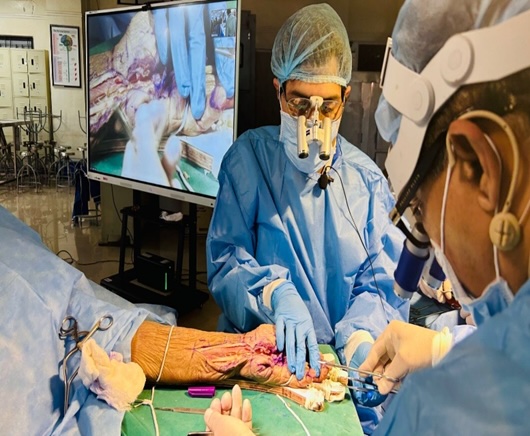
On the first day of the workshop, commencing at 8:30 am, a series of lectures focused on the clinical and surgical anatomy of the hand. Participants were introduced to advanced techniques in hand surgery, followed by demonstrations involving soft-embalmed cadavers—bodies preserved through specialized methods. This innovative approach to cadaver preservation enhanced the students’ comprehension of anatomical structures and surgical procedures, particularly concerning the flexor and extensor tendons and carpal tunnel decompression surgery, addressing issues such as finger tingling and pain.
Surgical techniques involving local flaps, aimed at preventing finger puncture through the repositioning of skin from alternative sites, were thoroughly discussed. Additionally, a presentation regarding Walawalkar Hospital was provided.
During the evening session, a comprehensive discussion and preoperative evaluation of patients scheduled for surgery the following day took place. The seminar proved to be highly beneficial for participants, enhancing their ability to draw clinical conclusions, make informed decisions, and systematically plan for the upcoming surgical procedures.
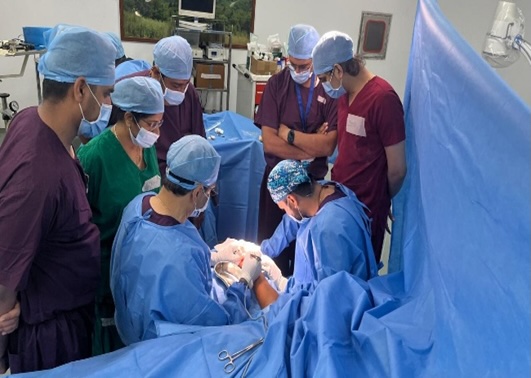
The following day, starting at 8:00 AM, participants had the opportunity to observe intricate hand surgeries conducted by skilled trainers in the operating room. These procedures included the release of a triggering finger to restore movement in a pinched finger, as well as carpal tunnel decompression surgery to alleviate tingling and pain in the fingers, thereby reducing nerve stress and associated discomfort.
A variety of procedures were performed, including reduction surgery, excision of malignant tumors on the hand, realignment of fractured fingers, and surgical interventions for wrist and finger fractures on a single hand. Some trainees had the opportunity to observe these surgeries closely within the operating room. Additionally, arrangements were made for all participants to view the procedures on a large LED screen in an adjacent room.
After the workshop, each trainee received a certificate acknowledging their successful participation, along with “MMC credit points.” The workshop effectively combined theoretical lectures, patient therapy, and cadaver demonstrations, resulting in a highly enriching educational experience. Under the expert guidance of Dr. Kanvinde and the collaborative efforts of all trainers, this workshop successfully set high academic standards in the field of ‘Hand Surgery.’ The feedback from the trainees was overwhelmingly positive, with a unanimous request for more frequent camps of this nature. All patients who underwent surgery left the facility in good spirits. The collaboration between the hospital and medical college staff was instrumental in ensuring the camp’s success.